erikwang2013/encryptable
| Install | |
|---|---|
composer require erikwang2013/encryptable |
|
| Latest Version: | v2.0.13 |
| PHP: | ^8.0 |
| License: | MIT |
| Last Updated: | Oct 18, 2026 |
| Links: | GitHub · Packagist |
Languages: English (this page) | 简体中文
Encryptable (erikwang2013/encryptable)
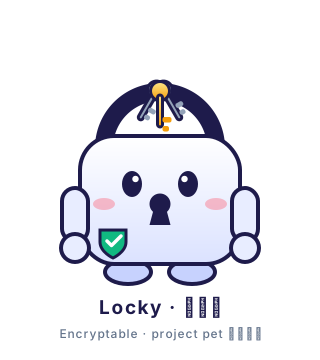
On PHP 8.0+ (dev toolchain: 8.2+), this package helps you anonymize / encrypt sensitive attributes in a query-friendly way: values are encrypted before persistence and decrypted when read through Eloquent (or manual APIs). It can also emit MySQL / PostgreSQL-compatible SQL fragments so you can compare or search against encrypted columns in raw queries. Frameworks are optional — the same two crypto paths run in plain native PHP via Encryption::configure() or environment variables.
This repository evolves from the ideas and behaviour of laravel-encryptable (Maize Tech). For the original design, issues, and releases, refer to that upstream project.
Project overview
What this package solves
Applications that handle personally identifiable information (PII), health records, financial data, or secrets often need to store those values encrypted at rest — not just hashed or masked — while keeping the ability to query by the original value (unique checks, existence lookups). Pure-encryption libraries leave you to implement the persistence layer yourself; ORM-only solutions lock you into one framework. This package bridges both gaps.
Core design
- Dual crypto path —
Encryption::php()for application-level encrypt/decrypt (OpenSSL, the same path Eloquent casts use), andEncryption::db()for generating SQL fragments that decrypt inside the database engine. The two paths share the same key and cipher config. - Authenticated encryption by default — the default cipher
aes-256-gcmprovides confidentiality and integrity via AEAD. If deterministic encryption is needed (required forUniqueEncrypted/ExistsEncryptedvalidation rules), switch toaes-128-ecb(identical plaintext → identical ciphertext) or another non-AEAD cipher. - Container-agnostic resolution —
Encryption::resolve()probes Hyperf, Laravel, and a user-supplied PSR-11 container; when none is available it falls back toEncryption::configure([...]), then to theENCRYPTION_KEY/ENCRYPTION_CIPHERenv vars. Framework bridges exist for Laravel 10–12, Webman (Illuminate), Hyperf 2–3, and ThinkPHP 6–8; plain PHP needs no bridge at all. - Zero-downtime key rotation — a primary key +
previous_keysring lets you rotate secrets without a big-bang re-encrypt.rotateToCurrentKey()provides gradual ciphertext migration under live traffic.
What this fork adds (beyond upstream laravel-encryptable)
| Area | Extension |
|---|---|
| Multi-framework | Bridges for Webman, Hyperf, and ThinkPHP in addition to Laravel/Lumen. |
| Composer plugin | Auto-publishes config files for the detected framework stack on install/update. |
| Key rotation | previous_keys ring + PreviousKeysParser + rotateToCurrentKey() (upstream only handles a single key). |
| Container resolution | Encryption::setResolver() / setContainer() callbacks so non-Laravel stacks can plug in without touching the core. |
| Type coverage | Return types on all public/protected methods; PHP 8.0+ baseline (no 8.1+ API). |
| Config layout | Unified config/plugin/{vendor}/{package}/app.php layout shared across Webman, Laravel, ThinkPHP; Hyperf autoload path for its dotted-key convention. |
When to use (and when not to)
| Use this package when | Consider alternatives when |
|---|---|
You need Eloquent attribute encryption that "just works" with $casts. |
You need full-disk or filesystem-level encryption (use LUKS, AWS EBS encryption, etc.). |
| You need to run uniqueness/existence checks against encrypted columns. | You don't need queryability and prefer stronger authenticated encryption (e.g. libsodium's secretbox). |
| You ship to multiple PHP frameworks and want one encryption contract. | You only target one framework and prefer its native encryption (e.g. Laravel's built-in encrypted cast). |
| You need to rotate encryption keys with zero downtime. | Your threat model requires per-row IVs/nonces and HMAC authentication. |
Project pet: Locky · 小锁灵
Locky is the pet of this package, and it is drawn from the design rather than bolted onto it: the amber key on its ring is the current primary key, and the two grey keys are previous_keys — still on the ring, still able to decrypt old ciphertext, until you retire them. That is the key-rotation model below, as a mascot.
It ships as part of the code, not only as documentation:
| Call | Returns |
|---|---|
Encryption::mascot() / Mascot::svg() |
The raw docs/pet.svg markup ('' if docs/ is not shipped). |
Mascot::expressions() |
Names of the 12 animated expression forms in docs/pet-expressions/. |
Mascot::expression($name) |
SVG markup for one expression form ('' if the name is unknown). |
Mascot::dataUri() |
data:image/svg+xml;base64,… — drop straight into <img src>. |
Mascot::ascii() |
A monospace pet for CLI output (the Composer plugin prints it on install). |
Mascot::NAME |
'Locky · 小锁灵'. |
use Erikwang2013\Encryptable\Encryption;

echo Encryption::mascot();   // SVG markup for an admin page or error screen
Purely decorative: no pet method touches keys, ciphers or payloads.
Features
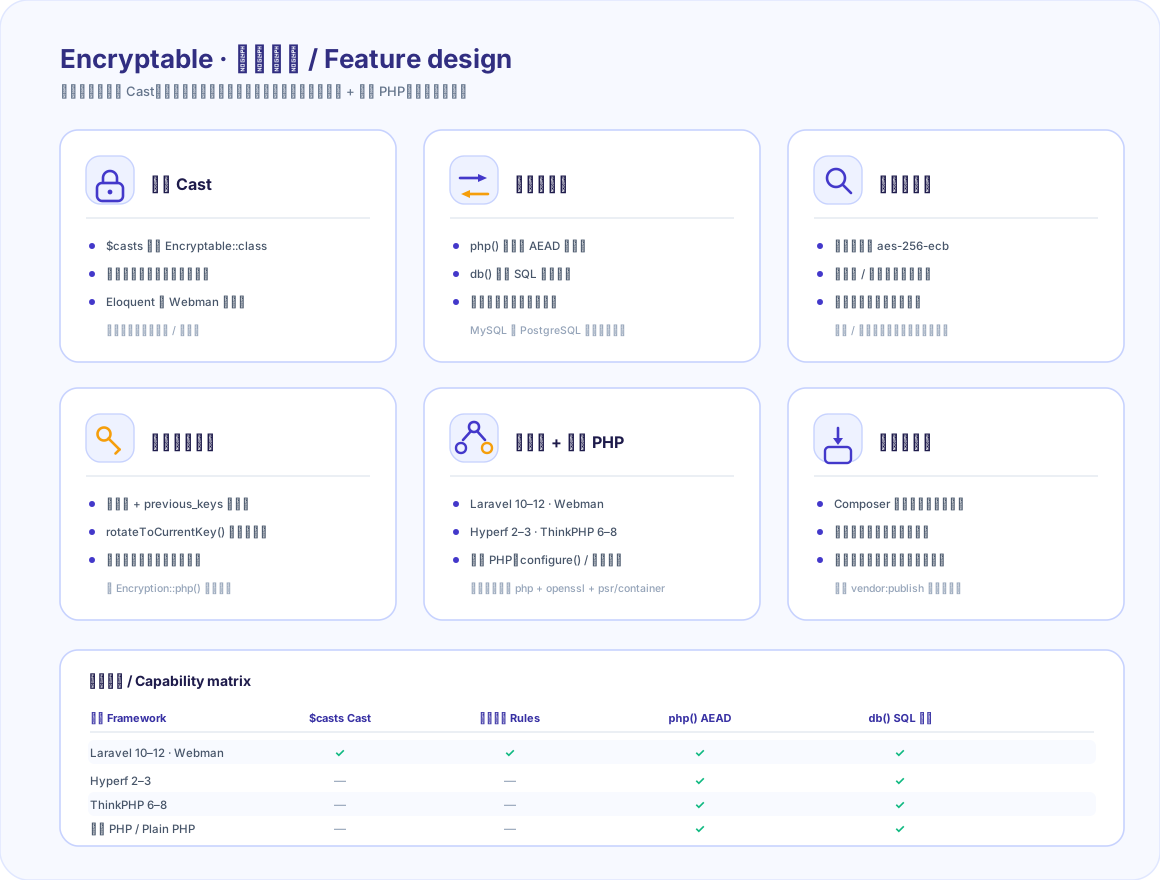
- Eloquent custom cast: use
Encryptable::classin$castsfor transparent encrypt/decrypt on attributes. - PHP-side crypto:
Encryption::php()->encrypt()/decrypt()for CLI, queues, or non-model code paths. - DB expressions:
Encryption::db()->decrypt()returns a SQL snippet (MySQL vs Postgres branches) suitable forwhereRaw-style comparisons against stored ciphertext. - Validation:
UniqueEncrypted,ExistsEncrypted, andRule::uniqueEncrypted()/Rule::existsEncrypted()macros (requiresilluminate/validation). - Multi-runtime bridges + native PHP: Laravel 10–12, Illuminate-based Webman, Hyperf 2–3, and ThinkPHP 6–8 each register container/config in their own way. With no framework at all,
Encryption::configure(['key' => …])or the env varsENCRYPTION_KEY,ENCRYPTION_CIPHER, optionalENCRYPTION_PREVIOUS_KEYSandENCRYPTION_DB_DRIVERdrive bothEncryption::php()andEncryption::db()(see Supported frameworks → Native PHP). - Composer install hook: this package is a Composer plugin; on
composer require/composer update, it inspectsvendor/composer/installed.php, lock, manifest, and project layout to publish config for the stack in use (see Installation → Composer plugin). - Key rotation (
Encryption::php()only): primary +previous_keys/ENCRYPTION_PREVIOUS_KEYSdecryption ring, optionalrotateToCurrentKey()for gradual re-encryption — full behavior and rollout are documented under Configuration → Key rotation.
Architecture
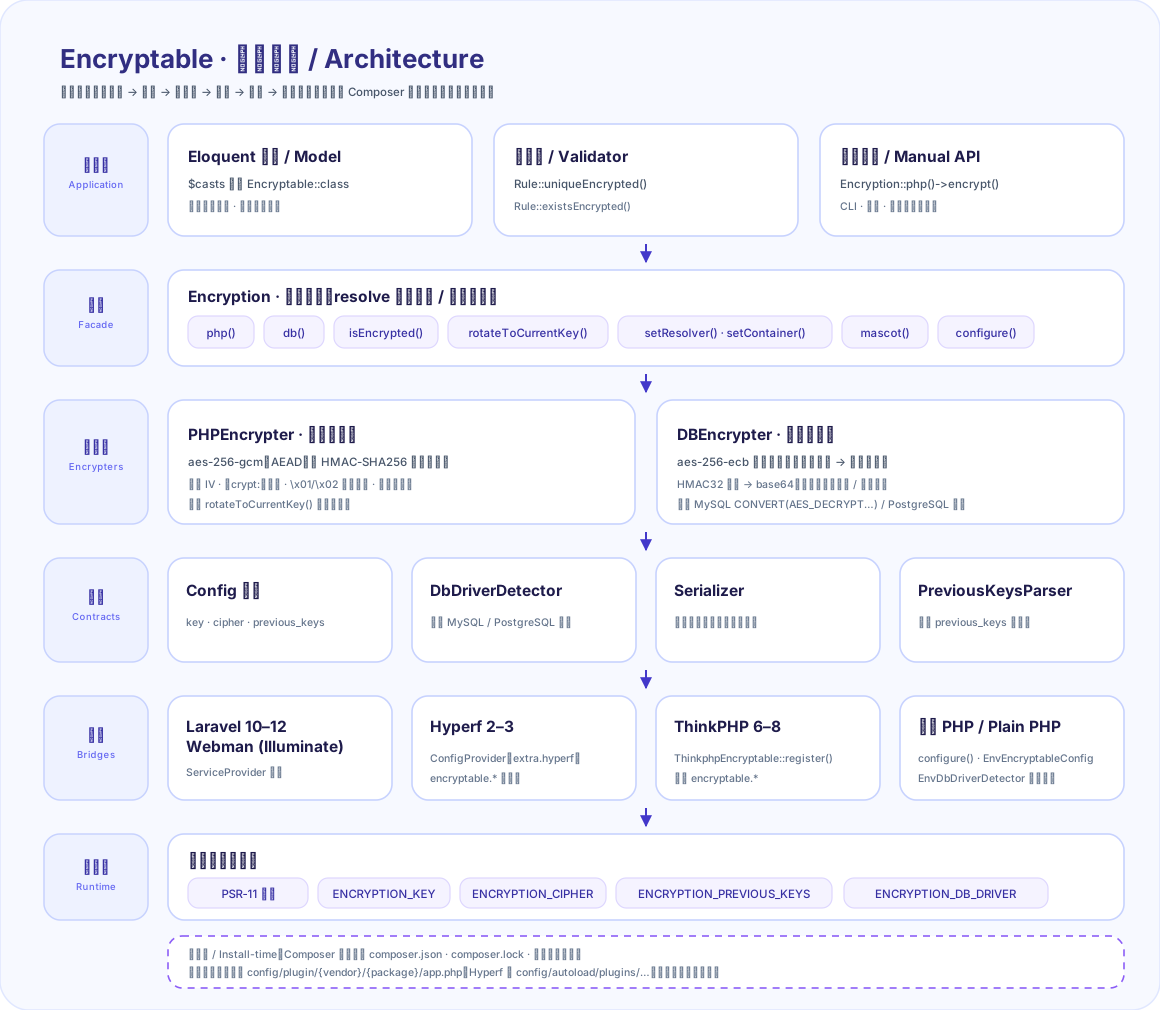
Every entry point — the Eloquent cast, a validation rule, or a manual Encryption::php() call — goes through the same static facade. The facade resolves a PHPEncrypter (application-level AEAD) or a DBEncrypter (deterministic ciphertext plus SQL decrypt fragments) from the framework container, or from environment variables when no container is available. Bridges only provide config and container bindings: the crypto core itself has no framework dependency (runtime require is just php, ext-openssl, psr/container).
Lifecycle
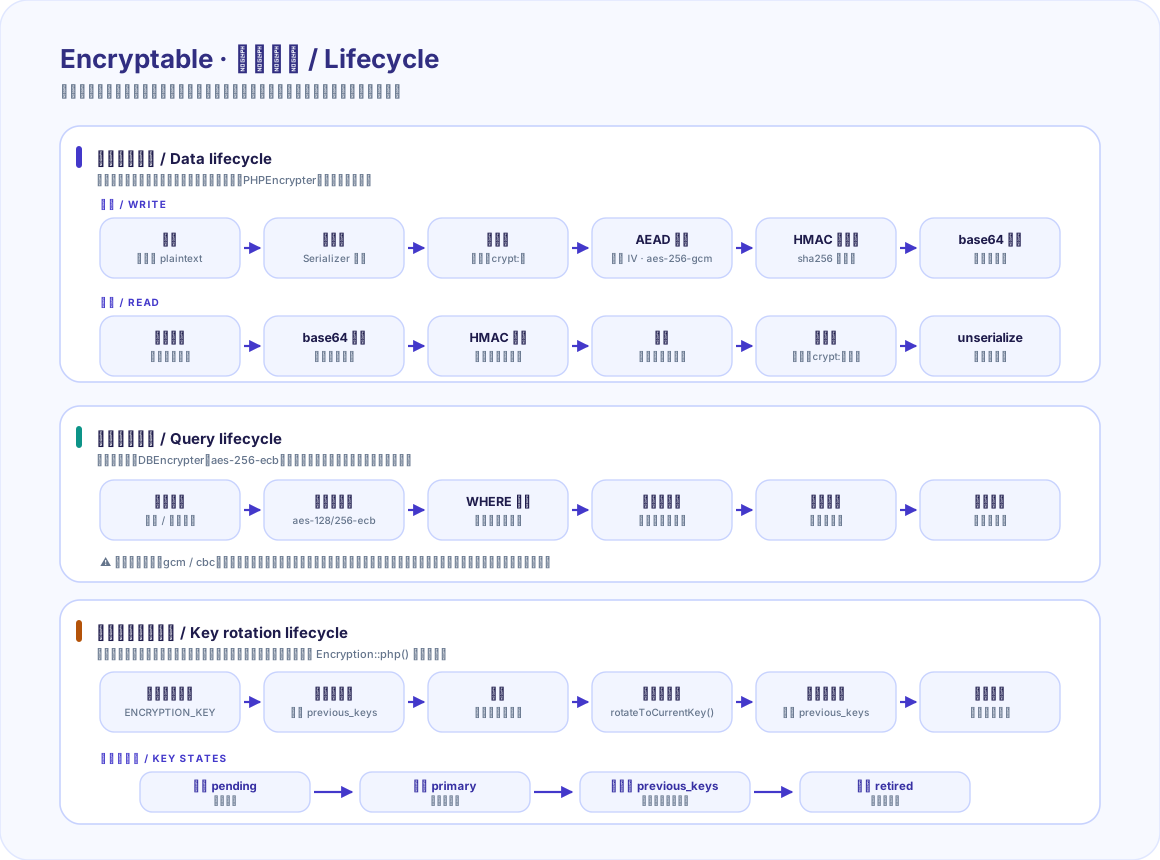
- Data — write and read are strictly symmetric:
serialize → dirty bit → random IV + AEAD → HMAC → base64on the way in, and the exact reverse on the way out. Any key still on the ring can decrypt. - Query — only deterministic ciphers (
aes-*-ecb) can be compared inside the database engine; fuzzy and range lookups never work against ciphertext, whatever the cipher. - Key rotation — a key walks
pending → primary → previous_keys → retired. Rollback is safe at any step while the old key is still on the ring.
Project structure
encryptable/
├── src/
│   ├── Encryption.php                  # static facade: php() · db() · isEncrypted() · cipher() · rotateToCurrentKey() · mascot()
│   ├── Encrypter.php                   # abstract base: key/cipher validation, decryption key ring
│   ├── PHPEncrypter.php                # application path: AEAD + HMAC, random IV, \x01/\x02 payload formats
│   ├── DBEncrypter.php                 # DB path: deterministic AES-ECB + SQL decrypt fragments
│   ├── Encryptable.php                 # Eloquent cast (CastsAttributes)
│   ├── EncryptableServiceProvider.php  # Laravel/Webman provider: publishes config, registers validation macros
│   ├── Config/                         # ArrayEncryptableConfig · EnvEncryptableConfig · EnvDbDriverDetector (native PHP)
│   ├── Contracts/                      # EncryptableConfigContract · DbDriverDetector
│   ├── Exceptions/                     # Decrypt · Encrypt · MissingKey · MissingCipher · (Un)Serialization
│   ├── Rules/                          # EncryptedRule base · UniqueEncrypted · ExistsEncrypted
│   ├── Support/                        # PackagePluginPaths · PreviousKeysParser · Mascot (the pet)
│   ├── Utils/Serializer.php            # serialization envelope shared by both encrypters
│   ├── Bridge/
│   │   ├── Laravel/                    # Illuminate config + DB driver detector
│   │   ├── Webman/                     # native Webman plugin config reader
│   │   ├── Hyperf/                     # ConfigProvider, config, DB driver detector
│   │   └── ThinkPHP/                   # ThinkphpEncryptable::register(), config, PSR-11 adapter
│   └── Composer/Plugin.php             # install/update hook: publishes config for the detected stack
├── config/
│   ├── encryptable.php                 # legacy flat config (still merged)
│   └── stubs/                          # plugin-app · webman-plugin-app · hyperf-plugin-autoload · hyperf-autoload-encryptable
├── docs/
│   ├── pet.svg                         # Locky · 小锁灵 — the project pet
│   ├── pet-expressions/                # 12 animated expression forms
│   ├── social-preview.svg / .png       # GitHub social preview (source + 1280×640 render)
│   ├── architecture.svg                # architecture diagram
│   ├── features.svg                    # feature design
│   ├── lifecycle.svg                   # value / query / key-rotation lifecycles
│   └── README.zh-CN.md                 # Chinese README
├── tests/                              # 19 PHPUnit test classes (cast, encrypters, key ring, bridges, native PHP, rules, config)
├── .github/workflows/                  # ci.yml (PHP 8.2–8.4 + PHP 8.0 syntax check) · release.yml
├── composer.json                       # composer-plugin entry point + framework metadata
├── phpstan.neon.dist · phpunit.xml
└── README.md
Requirements
| Item | Notes |
|---|---|
| PHP | ^8.0 with the openssl extension. Runtime supports PHP 8.0+ (no 8.1+ API is used anywhere in src/; CI checks syntax on 8.0 and runs the suite on 8.2–8.4); the dev toolchain (PHPUnit 11 / Pest / Larastan) requires PHP 8.2+ |
| Databases | Docs and SQL helpers target MySQL and PostgreSQL (driver name is used to pick the dialect for Encryption::db()). |
| Extensions (optional) | ext-pdo — only for the native-PHP dialect probe (new EnvDbDriverDetector(null, $pdo)); ENCRYPTION_DB_DRIVER or db_driver covers the same ground without PDO. |
Packagist: erikwang2013/encryptable (name in composer.json).
Supported frameworks
The table below summarizes expected compatibility, how to wire the package, and which features are Laravel-specific (Eloquent cast, illuminate/validation rules). Pin versions in your own project as needed. Config files are installed automatically by the Composer plugin when allowed (see Installation); you can still copy or vendor:publish manually if you prefer.
| Framework | Version (expected) | Integration | Eloquent $casts (Encryptable) |
Encryption::php() |
Encryption::db() |
UniqueEncrypted / ExistsEncrypted & macros |
|---|---|---|---|---|---|---|
| Laravel | 10.x–12.x (PHP ≥ 8.2) | Package discovery registers EncryptableServiceProvider + config/plugin/erikwang2013/encryptable/app.php (or legacy config/encryptable.php) |
✓ | ✓ | ✓ | ✓ |
| Webman | 1.x / 2.x with Illuminate (database / support / validation) | Register EncryptableServiceProvider + config/plugin/erikwang2013/encryptable/app.php (Composer plugin or manual) |
✓ (when using Eloquent) | ✓ | ✓ | ✓ |
| Hyperf | 2.x / 3.x | extra.hyperf.config merges Bridge\Hyperf\ConfigProvider + config/autoload/plugins/erikwang2013/encryptable.php (or legacy config/autoload/encryptable.php) |
— (no Laravel cast; call Encryption::php() in entities/repos) |
✓ | ✓ (install hyperf/db-connection) |
— (needs Illuminate validation stack) |
| ThinkPHP | 6.x–8.x | ThinkphpEncryptable::register($app) + config/plugin/erikwang2013/encryptable/app.php (or legacy config/encryptable.php) |
— (use accessors/mutators or types with Encryption::php()) |
✓ | ✓ | — |
| Native PHP | ≥ 8.0, no framework | Encryption::configure([...]), or ENCRYPTION_KEY / ENCRYPTION_CIPHER / ENCRYPTION_PREVIOUS_KEYS / ENCRYPTION_DB_DRIVER |
— (no Eloquent; call Encryption::php()) |
✓ | ✓ (EnvDbDriverDetector) |
— (needs the Illuminate validation stack) |
Legend: ✓ = supported for this stack out of the box; — = not provided; integrate in your own layer.
Native PHP (no framework, no container)
The package has no runtime dependency on any framework: require is only php, ext-openssl and psr/container. Point it at a key and it works — either from the environment or from an array.
use Erikwang2013\Encryptable\Encryption;

// Option A — environment (12-factor style), nothing to configure in code:
//   ENCRYPTION_KEY=<32 bytes for aes-256-*>
//   ENCRYPTION_CIPHER=aes-256-gcm
//   ENCRYPTION_PREVIOUS_KEYS='old-key-1,old-key-2'   # optional
//   ENCRYPTION_DB_DRIVER=mysql|pgsql                 # optional, for Encryption::db()

// Option B — one array, no env vars, no config file:
Encryption::configure([
    'key' => $_ENV['APP_KEY'],              // 32 bytes for aes-256-*, 16 bytes for aes-128-*
    'cipher' => 'aes-256-gcm',              // default when omitted
    'previous_keys' => ['2025-key'],        // optional decryption ring
    'db_driver' => 'pgsql',                 // optional: MySQL/PostgreSQL SQL fragment dialect
]);

$ciphertext = Encryption::php()->encrypt($value);      // application path (AEAD + HMAC)
$plain      = Encryption::php()->decrypt($ciphertext);
$sql        = Encryption::db()->decrypt('phone');      // SQL fragment, dialect from db_driver/PDO/env
Notes for the native path:
Encryption::configure()only fills the fallback slot. Container bindings andEncryption::setResolver()still win, so calling it inside Laravel/Hyperf changes nothing.Encryption::db()probes the dialect in this order:db_driverfromconfigure()→ENCRYPTION_DB_DRIVER→ aPDOconnection you pass tonew EnvDbDriverDetector(null, $pdo)→ MySQL as the default.- Payload types follow the serialization envelope:
string,int,float,bool,null($serialize = true, the default). With$serialize = falsepass a scalar or aStringable— arrays and objects throwSerializationExceptioninstead of a rawTypeError. Encryption::isEncrypted()recognises the application-level payload format only (\x01/\x02prefix); DB-format ciphertext is checked by the DB encrypter internally.- Failed decryption is not fatal by default:
decrypt()returns the input unchanged unless you pass$strict = true(rotateToCurrentKey()is always strict).
Installation
composer require erikwang2013/encryptable
Composer plugin (auto-publish config)
This package has "type": "composer-plugin" and registers Erikwang2013\Encryptable\Composer\Plugin. After install or update of erikwang2013/encryptable, Composer runs the plugin, which:
- Collects Composer package names (lowercased) from, in order:
vendor/composer/installed.php(andinstalled.jsonif present),composer.lock, then rootcomposer.jsonrequire/require-dev. This matches what is actually installed invendor/, including transitive Webman / Hyperf packages that never appear in your rootcomposer.json. - Adds filesystem hints when needed (e.g. Webman:
support/bootstrap.php,start.php, orwindows.phpplusconfig/; Laravel:artisan+bootstrap/app.phporapp/Http/Kernel.php; Hyperf:bin/hyperf.phporconfig/autoload/server.php; ThinkPHP: executablethinkfile in the project root). - Publishes files only when a supported framework is detected (see table). Existing target files are never overwritten.
- If nothing matches, it prints a skip notice so plain PHP projects are not modified.
| Detected dependency (examples) | Official layout we follow | File we create when missing |
|---|---|---|
laravel/framework or laravel/lumen-framework |
Laravel configuration — PHP under config/ (same physical layout as Webman plugins for this package) |
config/plugin/erikwang2013/encryptable/app.php (merged as config('encryptable.*') via EncryptableServiceProvider) |
workerman/webman / webman/* |
Webman plugins — config/plugin/{vendor}/{name}/app.php |
config/plugin/erikwang2013/encryptable/app.php (config('plugin.erikwang2013.encryptable.app.*')) |
topthink/framework or topthink/think |
ThinkPHP 8 config — project config/; plugin-style path for this package |
config/plugin/erikwang2013/encryptable/app.php (injected as encryptable.* when you call ThinkphpEncryptable::register) |
hyperf/framework or hyperf/hyperf |
Hyperf config — merge PHP files under config/autoload/ (relative path becomes dot keys) |
config/autoload/plugins/erikwang2013/encryptable.php (plugins.erikwang2013.encryptable.*; see HyperfEncryptableConfig) |
Laravel / Lumen / ThinkPHP / Webman share the same config/plugin/erikwang2013/encryptable/app.php template (config/stubs/plugin-app.php). Hyperf uses config/autoload/plugins/erikwang2013/encryptable.php when neither that file nor the legacy config/autoload/encryptable.php exists yet (legacy installs keep working; HyperfEncryptableConfig reads the plugin path first, then encryptable.*). If multiple stacks match (e.g. a monorepo), every applicable file is created when missing.
Composer 2.2+ may block plugins until you allow them. Add this to your application composer.json (once), then run composer require again if needed:
"config": {
    "allow-plugins": {
        "erikwang2013/encryptable": true
    }
}
Or approve the prompt Composer shows when requiring the package.
Configuration files (manual copy, optional)
If the plugin is blocked or you manage config in VCS templates yourself, copy the matching template from this package into the path your framework expects, then adjust .env as needed.
| Framework | Source inside vendor (package erikwang2013/encryptable) |
Destination in your project |
|---|---|---|
| Laravel / Lumen / ThinkPHP / Webman | vendor/erikwang2013/encryptable/config/stubs/plugin-app.php |
config/plugin/erikwang2013/encryptable/app.php |
| Laravel (legacy, optional) | vendor/erikwang2013/encryptable/config/encryptable.php |
config/encryptable.php (still merged by EncryptableServiceProvider if present and plugin file is absent) |
| Hyperf (recommended) | vendor/erikwang2013/encryptable/config/stubs/hyperf-plugin-autoload.php |
config/autoload/plugins/erikwang2013/encryptable.php |
| Hyperf (legacy) | vendor/erikwang2013/encryptable/config/stubs/hyperf-autoload-encryptable.php |
config/autoload/encryptable.php (top-level key / cipher → encryptable.*) |
Note:
plugin-app.phpis the shared stub (top-levelkey,cipher). Webman reads it natively asplugin.erikwang2013.encryptable.app.*. Laravel / Lumen merge it intoencryptable.*. ThinkPHP loads it inThinkphpEncryptable::registerintoencryptable.*. Hyperf autoload files are keyed by path: the recommended file maps toplugins.erikwang2013.encryptable.*; the legacy filenameencryptable.phpmaps toencryptable.*.
Shell examples:
# Laravel / Lumen / ThinkPHP / Webman (shared plugin layout)
mkdir -p config/plugin/erikwang2013/encryptable
cp vendor/erikwang2013/encryptable/config/stubs/plugin-app.php config/plugin/erikwang2013/encryptable/app.php

# Hyperf (recommended)
mkdir -p config/autoload/plugins/erikwang2013
cp vendor/erikwang2013/encryptable/config/stubs/hyperf-plugin-autoload.php config/autoload/plugins/erikwang2013/encryptable.php
Laravel alternative (vendor:publish publishes the plugin file, optional legacy flat file, and the Hyperf stub path for convenience):
php artisan vendor:publish --provider="Erikwang2013\Encryptable\EncryptableServiceProvider" --tag="encryptable-config"
Laravel (remaining steps)
With package auto-discovery enabled, Erikwang2013\Encryptable\EncryptableServiceProvider is registered. Ensure config/plugin/erikwang2013/encryptable/app.php exists (Composer plugin or Laravel row / vendor:publish), or keep a legacy config/encryptable.php only.
Webman (with Illuminate)
Install illuminate/database, illuminate/support, illuminate/validation, etc. as needed. Ensure the plugin config exists at config/plugin/erikwang2013/encryptable/app.php (the Composer plugin or vendor:publish creates it). Then register:
Erikwang2013\Encryptable\EncryptableServiceProvider
in your plugin/bootstrap code. Runtime reads config('plugin.erikwang2013.encryptable.app.key') and .cipher, per Webman plugin config rules.
Hyperf
- Copy or auto-install config per the Hyperf row (
config/autoload/plugins/erikwang2013/encryptable.php, or legacyconfig/autoload/encryptable.php). Values are read asplugins.erikwang2013.encryptable.key/.cipher, with fallback toencryptable.*. - This package declares
Erikwang2013\Encryptable\Bridge\Hyperf\ConfigProviderundercomposer.json→extra.hyperf.configfor Hyperf to merge. - For
Encryption::db(), installhyperf/db-connection.
ThinkPHP
- Prefer
config/plugin/erikwang2013/encryptable/app.php(same stub as Webman/Laravel). Legacyconfig/encryptable.phpstill works if you do not use the plugin path. - During application bootstrap (e.g. service registration), call:
\Erikwang2013\Encryptable\Bridge\ThinkPHP\ThinkphpEncryptable::register($app);
Configuration
After copying or publishing config/plugin/erikwang2013/encryptable/app.php, legacy config/encryptable.php, or Hyperf’s config/autoload/plugins/erikwang2013/encryptable.php / config/autoload/encryptable.php, the main keys are:
| Key | Description |
|---|---|
key |
Primary secret key, from ENCRYPTION_KEY. Raw bytes or a Laravel-style base64:… value (decoded automatically). New ciphertext is always produced with this key. |
cipher |
Cipher id, default aes-256-gcm, from ENCRYPTION_CIPHER; keep aligned with DB defaults and any existing data contract. All keys in the ring must use this cipher. |
previous_keys |
Retired keys still tried for decrypt after the primary fails (same cipher, same raw/base64:… forms). From ENCRYPTION_PREVIOUS_KEYS (comma-separated or JSON array) or the previous_keys config entry. |
Without Laravel / bindings, Encryption::php() can still read ENCRYPTION_KEY, ENCRYPTION_CIPHER, and ENCRYPTION_PREVIOUS_KEYS via EnvEncryptableConfig.
Key rotation (elegant zero-downtime)
You can change the primary encryption key without taking the app offline for a big-bang re-encrypt: new data is sealed with the new primary; existing rows keep decrypting as long as the key that produced them still appears in the configured ring (primary or previous_keys).
Behavior summary (what this package implements)
| Area | Behavior |
|---|---|
| Config contract | EncryptableConfigContract::getPreviousKeys(): array — retired keys used only after the primary getKey() fails to produce valid plaintext. Implemented for Laravel (encryptable.previous_keys), Webman plugin app.php, Hyperf (plugins.* / encryptable.*), ThinkPHP (encryptable.previous_keys), and EnvEncryptableConfig (ENCRYPTION_PREVIOUS_KEYS). |
| Parsing | Erikwang2013\Encryptable\Support\PreviousKeysParser turns ENCRYPTION_PREVIOUS_KEYS or config into a list<string>: comma-separated values, or a JSON array string (e.g. ["k1","k2"]), or an already-loaded PHP array. |
| Key ring | Encrypter::getDecryptionKeyRing() builds [primary, …previous] with empty strings and duplicate keys removed. All keys in the ring must share the same cipher. |
| Encrypt | PHPEncrypter::encrypt() always uses the primary key only (getKey()). |
Decrypt & isEncrypted() |
Decrypt tries each ring key in order and accepts a plaintext only when it starts with the internal dirty prefix (crypt:), so random garbage from a wrong key is not treated as valid. isEncrypted() itself is a cheap format check (strict base64 + \x01/\x02 marker + minimum length) and runs no OpenSSL work. |
| Re-encrypt API | PHPEncrypter::rotateToCurrentKey(?string $payload, bool $serialize = true) decrypts with the ring then re-encrypts with the current primary. Encryption::php()->rotateToCurrentKey(...) delegates to it. Non-encrypted payloads are returned unchanged; null stays null. |
| Out of scope | Encryption::db() / DBEncrypter — SQL snippets use the primary key only. previous_keys is ignored there. Rotate DB-native encrypted columns with an app-side or migration pipeline (read → decrypt in PHP if needed → write), not via this ring. |
Recommended rollout (operations)
- Set the new secret as
ENCRYPTION_KEY(primary). Move the old primary intoENCRYPTION_PREVIOUS_KEYS(orprevious_keysin config). Prefer listing the most recently retired key first among several retirees. - Deploy — reads succeed because decrypt walks the ring until a key yields valid package plaintext.
- Optionally run a background job that loads each encrypted field and calls
Encryption::php()->rotateToCurrentKey($ciphertext)(with the same$serializeflag your data used) so ciphertext gradually moves to the new primary; then traffic no longer depends on old keys. - Remove an entry from
previous_keysonly after you are sure no row still encrypted with that key remains (or you accept those rows becoming unreadable).
Configuration surface
| Source | Keys |
|---|---|
| Environment | ENCRYPTION_KEY, ENCRYPTION_CIPHER, ENCRYPTION_PREVIOUS_KEYS |
Laravel / merged encryptable |
key, cipher, previous_keys (see config/encryptable.php or published plugin app.php) |
Webman plugin app.php |
key, cipher, previous_keys (same shape; Webman reads plugin.*.app.*) |
| Hyperf autoload stubs | key, cipher, previous_keys under plugins.erikwang2013.encryptable.* or legacy encryptable.* |
Multiple previous keys (how to configure)
Decrypt order is always: current primary ENCRYPTION_KEY first, then previous_keys in list order (put the key you retired most recently before older ones, so the common “last rotation” case is tried early).
1 — Environment variable (several retirees)
- Comma-separated (no spaces required, but trims are applied):
ENCRYPTION_PREVIOUS_KEYS=oldKeyOne16bytes!!,olderKeyTwo16byte,ancientKeyThree16b
- JSON array (one line in
.env; use this if a key might contain a comma):
ENCRYPTION_PREVIOUS_KEYS=["oldKeyOne16bytes!!","olderKeyTwo16byte","ancientKeyThree16b"]
2 — Laravel / ThinkPHP merged config (encryptable.previous_keys)
PHP array (same order semantics as above). Each string must match the same length OpenSSL expects for your cipher (e.g. aes-256-gcm typically uses a 32-byte secret string).
'previous_keys' => [
    'oldKeyOne16bytes!!',
    'olderKeyTwo16byte',
    'ancientKeyThree16b',
],
Or reuse the parser from env in config/encryptable.php / plugin app.php (already the default): PreviousKeysParser::parse(env('ENCRYPTION_PREVIOUS_KEYS')).
3 — Webman plugin app.php / Hyperf autoload
Use the same previous_keys key as in the stubs: either a PHP array as above, or PreviousKeysParser::parse(env('ENCRYPTION_PREVIOUS_KEYS')).
Usage
1. Model cast (Laravel / Webman with Eloquent)
<?php

namespace App\Models;

use Illuminate\Database\Eloquent\Model;
use Erikwang2013\Encryptable\Encryptable;

class User extends Model
{
    protected $fillable = ['name', 'email'];

    protected $casts = [
        'name' => Encryptable::class,
        'email' => Encryptable::class,
    ];
}
Attributes are encrypted/decrypted automatically on read/write.
2. Manual encrypt/decrypt (PHP)
use Erikwang2013\Encryptable\Encryption;

$plain = 'value to protect';
$cipher = Encryption::php()->encrypt($plain);

$restored = Encryption::php()->decrypt($cipher);
3. SQL decrypt expression (DB)
use Erikwang2013\Encryptable\Encryption;

// Deterministic ciphertext for equality lookups (same plaintext → same ciphertext)
$stored = Encryption::db()->encrypt('value to compare', false);

// Fragment usable in SELECT / WHERE (syntax differs for MySQL vs Postgres)
$expr = Encryption::db()->decrypt('column_name');
Encryption::db()->encrypt()storesbase64(HMAC + AES-ECB ciphertext)so encrypted columns stay queryable;decrypt()returns the SQL fragment that strips the HMAC and decrypts a stored column. Both use the primary key only.
4. Custom validation rules
use Illuminate\Support\Facades\Validator;
use Illuminate\Validation\Rule;
use Erikwang2013\Encryptable\Rules\ExistsEncrypted;
use Erikwang2013\Encryptable\Rules\UniqueEncrypted;

Validator::make($data, [
    'email' => [
        'required',
        'email',
        new ExistsEncrypted('users'),
        // or Rule::existsEncrypted('users')
    ],
]);

Validator::make($data, [
    'email' => [
        'required',
        'email',
        new UniqueEncrypted('users'),
        // or Rule::uniqueEncrypted('users')
    ],
]);
Composer / dependencies
- Runtime
require: onlyphp,ext-openssl, andpsr/container, so Hyperf projects are not forced to pull all of Illuminate. - Laravel / Webman (Illuminate): satisfy
EncryptableServiceProvider, casts, and rules vialaravel/frameworkor the suggestedilluminate/*packages (seecomposer.json→suggest).
Development
composer install
composer test        # Pest
composer analyse     # PHPStan (requires local config)
composer format      # Laravel Pint
References & credits
- Upstream reference: maize-tech/laravel-encryptable — canonical design, issues, and community discussion for the original Laravel package.
- This fork extends multi-framework bridges, Composer metadata, and config/container resolution; compare
CHANGELOGand config when migrating from upstream.
开源不易,欢迎支持
| 微信支付 | 支付宝 |
|---|---|
 |
 |
License
MIT. See LICENSE.md.
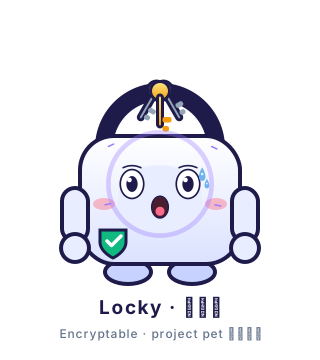
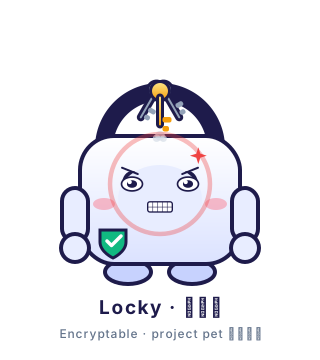
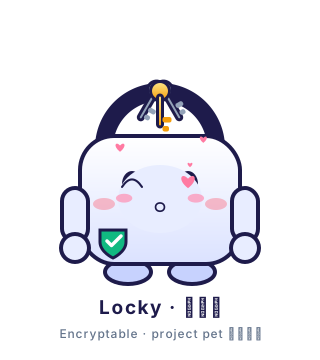
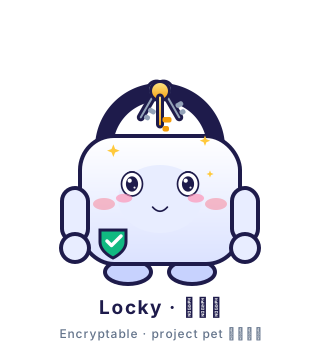
项目宠物表情形态 · Locky
| 笑 | 欢乐 | 哭 | 沮丧 | 惊恐 | 愤怒 |
|---|---|---|---|---|---|
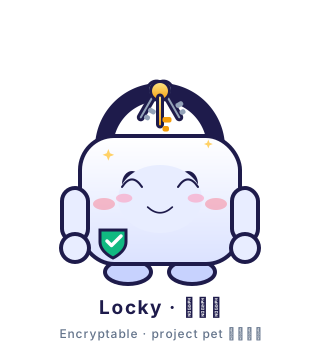 |
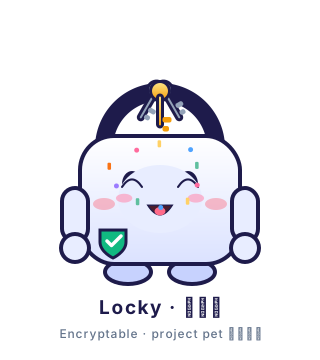 |
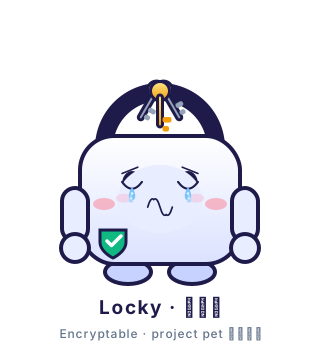 |
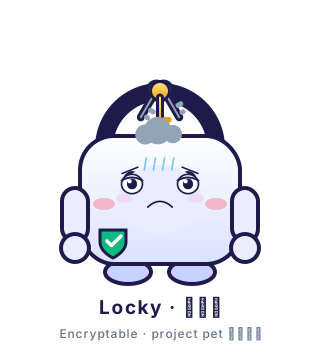 |
 |
 |
:emoji-smile: |
:emoji-joy: |
:emoji-cry: |
:emoji-depressed: |
:emoji-terrified: |
:emoji-angry: |
| 撒娇 | 卖萌 | 讨好 | 敲打 | 捂脸 | 吐舌头 |
|---|---|---|---|---|---|
 |
 |
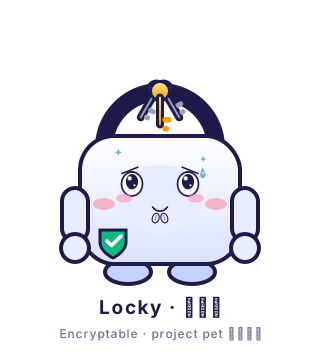 |
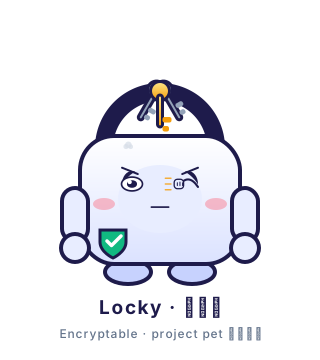 |
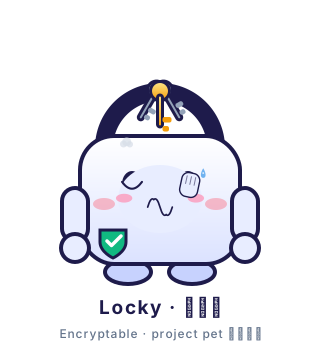 |
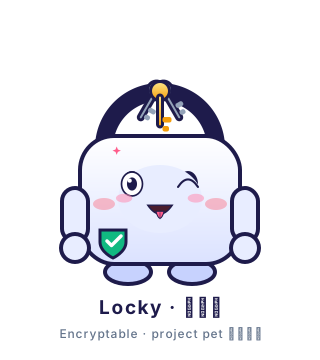 |
:emoji-coquettish: |
:emoji-cute: |
:emoji-pleasing: |
:emoji-knocking: |
:emoji-facepalm: |
:emoji-tongue: |
12 种彩色动态形态:笑 / 欢乐 / 哭 / 沮丧 / 惊恐 / 愤怒 / 撒娇 / 卖萌 / 讨好 / 敲打 / 捂脸 / 吐舌头。每个 SVG 自带表情、情绪特效与整体动效,并遵循
prefers-reduced-motion。
视觉资产授权 / Visual Assets License
本项目的项目宠物、图片、图标、表情(包括 docs/pet-expressions/ 等目录下的
SVG / PNG)不是开源资产,版权归作者所有。未经书面许可不得复制、修改、再分发或
用于商业用途;商业使用需取得商业授权,联系 erik@erik.xyz。详见
ASSETS-LICENSE.md。
代码部分仍遵循仓库原有
LICENSE;第三方素材(如明确标注的 Go Gopher 等)仍遵循其原许可证。
Related Packages
Hashids integration for Laravel, Webman, ThinkPHP, Hyperf, Yii 2, and Yii 3 (mul...
Scout-style full-text search for Eloquent models on Webman, Laravel, Hyperf, Thi...
An independent translation component, forked by illuminate/translation.
Hyperf Scout provides a driver based solution to searching your Eloquent models....
Version History
| Version | Released | PHP | License |
|---|---|---|---|
| v2.0.13 | ^8.0 | MIT | |
| v2.0.12 | ^8.0 | MIT | |
| v2.0.11 | ^8.0 | MIT | |
| v2.0.10 | ^8.0 | MIT | |
| v2.0.9 | ^8.0 | MIT | |
| v2.0.8 | ^8.0 | MIT | |
| v2.0.7 | ^8.0 | MIT | |
| v2.0.6 | ^8.0 | MIT | |
| v2.0.5 | ^8.0 | MIT | |
| v2.0.4 | ^8.0 | MIT | |
| v2.0.3 | ^8.2 | MIT | |
| v2.0.2 | ^8.2 | MIT | |
| v2.0.1 | ^8.2 | MIT | |
| v2.0.0 | ^8.2 | MIT | |
| v1.0.6 | ^8.2 | MIT | |
| v1.0.5 | ^8.2 | MIT | |
| v1.0.4 | ^8.2 | MIT | |
| v1.0.3 | ^8.2 | MIT | |
| v1.0.2 | ^8.2 | MIT | |
| v1.0.1 | ^8.2 | MIT |